
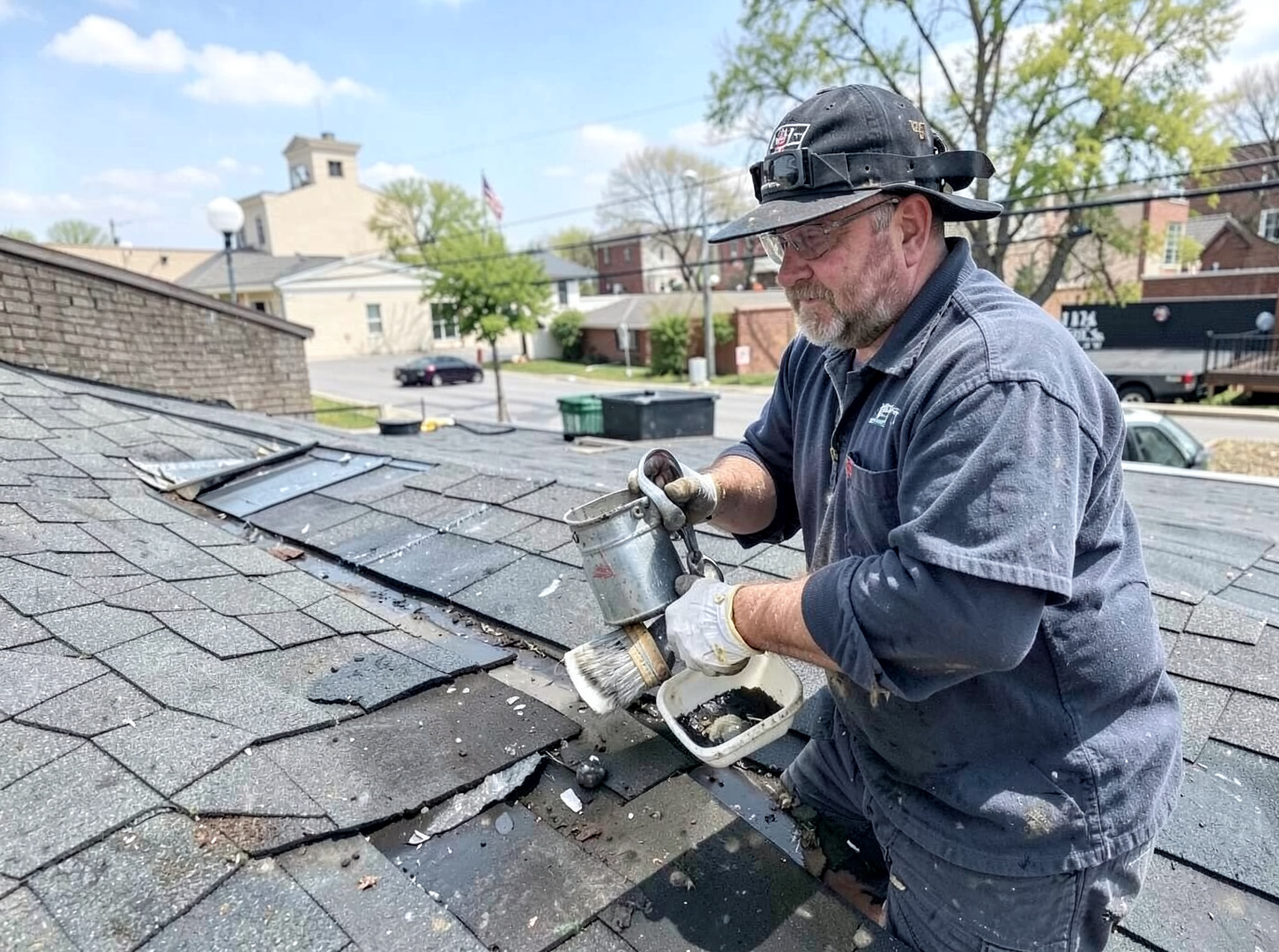
Muncie's humid continental climate brings hot summers that bake asphalt shingles followed by cold winters that cause repeated expansion and contraction. Older homes in the Old West End and Westside often have 30- to 50-year-old decks and layered shingles that crack at the seams when temperatures swing. Leaks frequently appear first around plumbing vents and valleys where ice dams push water under flashing during January thaws. A roofing contractor must locate the exact entry point rather than simply coating the surface, because trapped moisture will rot sheathing before spring.
In Downtown Muncie and East Central neighborhoods, many two-story homes sit close together with limited access, so crews carry portable tarping systems and ladders that fit narrow driveways. When a leak is reported after a thunderstorm, the first priority is stopping interior water migration into plaster ceilings and electrical boxes. Technicians check attic insulation for saturation, because wet cellulose can hold moisture against rafters long after the roof is sealed. Skipping this step leads to mold callbacks weeks later.
Delaware County building practices require permits for any deck replacement, so emergency repairs focus on preserving the existing structure while documenting damage for insurance. Near Ball State University, rental properties often have deferred maintenance on ridge vents and step flashing where additions meet original roofs. A proper repair here includes new step flashing tucked under existing shingles rather than surface caulk that fails within one freeze-thaw cycle.
Technician insight
In Muncie, the thing that catches most people out with Emergency Roof Leak Repair is how quickly water travels along the felt paper in the cold winters, soaking insulation two or three rafter bays away from the actual hole. Homes in the Old West End with original 1920s rafters and no ridge vent trap that moisture longest, so we always pull back insulation to check for hidden rot before we leave.
Riverside Leak After March Storm
Water was dripping through a ceiling light in a 1940s Riverside bungalow after heavy rain. We found a split valley flashing where two additions met. The crew removed three courses of shingles, replaced the felt and flashing, and reinstalled matching shingles the same afternoon. No further leaks appeared after the next rain.
Emergency Roof Leak Repair Services We Offer
✓Temporary Tarping and Securing
Install heavy-duty reinforced tarps over active leak zones to protect interiors until permanent repairs can be scheduled.
✓Shingle and Valley Leak Repairs
Remove damaged shingles, replace underlayment, and reseal valleys where water channels between rows during heavy rain.
✓Flashing and Vent Boot Replacement
Cut out corroded pipe boots and step flashing around chimneys, then install new lead or synthetic flashing matched to existing shingles.
✓Ice Dam and Gutter Leak Fixes
Clear ice dams along eaves in Riverside and Westside homes and repair gutter seams that back water under roof edges.
✓Skylight and Ridge Vent Sealing
Re-bed skylight frames and ridge vent ends with compatible sealant to stop wind-driven rain from entering attic spaces.
Emergency Roof Leak Repair Cost in Muncie, IN
| Service | Typical Range | What Affects It |
|---|---|---|
| Emergency dispatch and inspection | $125–$225 | Often credited toward repair if work proceeds same day |
| Temporary tarping only | $250–$450 | Price rises with roof pitch and two-story access in Downtown Muncie |
| Single vent boot or flashing repair | $300–$550 | Includes new material and disposal; higher on slate or tile |
| Valley section repair with underlayment | $450–$750 | Depends on length and whether decking must be replaced |
Ranges are typical for Muncie, IN and confirmed with an exact written quote before any work starts.
How it works
- 1
Phone Assessment and Dispatch
Gather roof age, leak location, and recent weather details to send the correct crew and materials to the Muncie address.
- 2
On-Site Water Entry Inspection
Climb to locate active drips, check attic for wet insulation, and trace water paths from ridge to eave in neighborhoods like Old West End.
- 3
Temporary Containment
Apply tarps or quick-seal patches to stop interior damage while documenting conditions for insurance adjusters.
- 4
Permanent Targeted Repair
Replace affected flashing, shingles, or underlayment and verify the fix with a hose test before leaving the site.
Pricing
Upfront quotes after inspection; most emergency calls fall between a few hundred and low thousands depending on access and extent.